Amid the Carnage
The Miraculous Christmas Truce of 1914
Amid the Carnage: The Miraculous Christmas Truce of 1914
In the frozen grip of December 1914, as the world teetered on the brink of a mechanized apocalypse, a flicker of humanity pierced the darkness of the Great War. What began as a fervent rush to arms in the summer had devolved into a grinding stalemate, claiming hundreds of thousands of lives in mere months. Soldiers from across Europe, many of them young men who had enlisted with dreams of glory, found themselves entombed in a labyrinth of trenches stretching from the North Sea to the Swiss border—the infamous Western Front. Here, amid the scarred earth of Belgium and France, an extraordinary event unfolded: the Christmas Truce. It was not a single, orchestrated act but a series of spontaneous ceasefires, where enemies laid down their rifles to share in the spirit of the season. This moment of fragile peace, born from shared suffering and a longing for home, reminds us that even in the depths of hell, the human heart can seek connection over conflict.
The "hell" that enveloped these men was a nightmare of industrial-scale horror, far removed from the romantic notions of warfare that had lured them to the front. By late 1914, the initial mobile campaigns had solidified into trench warfare, a siege-like existence where soldiers hunkered down in narrow ditches often just yards apart from their foes. The trenches were a quagmire of misery: three feet deep and wide, they filled with freezing rainwater and mud that clung like a shroud, turning boots into sodden weights and fostering trench foot—a agonizing condition that could lead to amputation. Rats feasted on the unburied dead, spreading disease amid the constant stench of decay and cordite. Artillery barrages shattered the air day and night, raining shrapnel that mutilated bodies and minds alike. Snipers picked off the unwary, while machine guns mowed down waves of attackers in No Man's Land, that deadly strip of barbed wire, craters, and corpses between the lines. The landscape itself was a wasteland—shattered trees, uprooted earth, and the remnants of villages reduced to rubble. Psychologically, it was torment: the endless whine of bullets, the screams of the wounded left to die in the open, and the bone-chilling cold that made sleep impossible. Morale plummeted as the war, expected to end by Christmas, dragged on with no end in sight. In places like the Ypres salient in Belgium or near Neuve Chapelle in France, men endured this abyss, their letters home masking the despair with forced cheer. It was a hell that stripped away illusions, leaving only the raw instinct to survive—and, remarkably, to reach out.
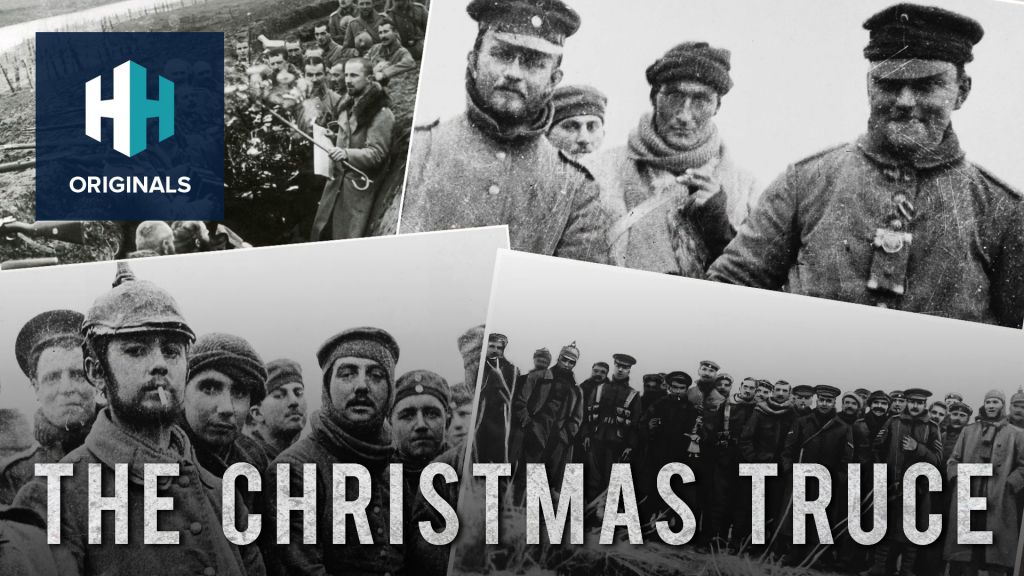
The truce began not with grand gestures from commanders, but with small, tentative acts of goodwill on Christmas Eve, as the stars emerged over the battered fields. In many sectors, it started with the Germans, who had received care packages from home including small Christmas trees adorned with candles. Late that evening, around 10 p.m., German troops began lighting these candles along their parapets and singing carols like "Stille Nacht" (Silent Night). The melody carried across the frosty air to the British lines, where soldiers, huddled in their damp dugouts, responded with their own songs—"O Come, All Ye Faithful" or "The First Noel." Shouts of "Merry Christmas, Englishmen!" echoed from the German trenches, met with replies like "Merry Christmas, Fritz!" from the British. Emboldened by the music, a brave few ventured out unarmed into No Man's Land. One German soldier reportedly called out, "Come over here," to which a British sergeant replied, "You come half-way. I come half-way." What followed was a cascade of humanity: soldiers from both sides climbed from their trenches, hands raised, and met in the middle. They shook hands, exchanged cigarettes, cigars, chocolate, and even newspapers. In some areas, like near Ypres or the Comines sector, the artillery fell silent, allowing for joint burial parties to recover the dead—a poignant act amid the carnage. The truce spread unevenly, lasting through Christmas Day and, in spots, into Boxing Day or even New Year's, though fighting raged on in other parts of the front.
Those involved were primarily British and German troops, whose lines faced each other in the Flanders region of Belgium and northern France. French and Belgian soldiers participated in scattered instances, such as near Dixmude on the Yser Front or in the Vosges Mountains, but the most widespread fraternization occurred between the British Expeditionary Force and German units. Specific regiments included the British 1st Battalion Royal Warwickshire Regiment, the Scots Guards, the Royal Welch Fusiliers, the Lancashire Fusiliers, and the Black Watch (1st/5th Battalion). On the German side, the 133rd and 134th Royal Saxon Regiments, the 16th Bavarian Reserve Infantry Regiment (which included a young corporal named Adolf Hitler, who reportedly opposed the truce and scolded his comrades), and Battalion 371 were prominent. French units in the Comines sector and Belgian troops near Dixmude also joined in limited ways.
Personal stories bring this miracle to life, revealing the profound humanity beneath the uniforms. Captain Sir Edward Hulse of the Scots Guards described a sing-along that culminated in both sides belting out "Auld Lang Syne," calling it "absolutely astounding." Bruce Bairnsfather, a British machine gunner with the Royal Warwickshire Regiment, recounted trading songs and tobacco in No Man's Land, later illustrating the scene in his famous cartoons; he marveled at the lack of hate, saying it felt like chatting with old friends. German Lieutenant Kurt Zehmisch, a schoolteacher from the 134th Saxons, noted in his diary how the English produced a soccer ball, leading to an impromptu game on the icy ground—goals marked by caps, with up to 200 players in a free-for-all. Ernie Williams, a British fighter, echoed this, describing the ball appearing "from somewhere" amid the barbed wire. Alfred Anderson, a private in the Black Watch and one of the last surviving veterans, remembered the eerie silence on Christmas morning—no gunfire, just a brief respite before the killing resumed. French soldier Gervais Morillon wrote of Germans waving white flags and approaching unarmed, filthy and weary, urging secrecy about the encounter. Even officers like Brigadier-General Walter Congreve of the 18th Infantry Brigade joined in, smoking cigars with young German snipers. Tragically, not all survived the day—British Private Percy Huggins was killed by a sniper while in No Man's Land.
Yet, this truce was fleeting, a heartbeat of peace in a symphony of slaughter. Commanders like British General Sir Horace Smith-Dorrien condemned it, issuing orders against future fraternization, fearing it eroded the will to fight. By December 26, the guns roared again, and the war ground on for four more bloody years, claiming over 15 million lives. In reflecting on the Christmas Truce, we glimpse the tragedy of war: these men, divided by flags but united by suffering, chose empathy over enmity for one sacred day. It was a testament to the enduring light of the human spirit, a reminder that amid the hell of hatred, love and brotherhood can emerge unbidden, if only for a moment. May we honor their memory by striving for a world where such truces are not miracles, but the norm.
Listen to the song .. Silent Night in No Man's Land
Share: